



Cutting sewage spills from storm overflows
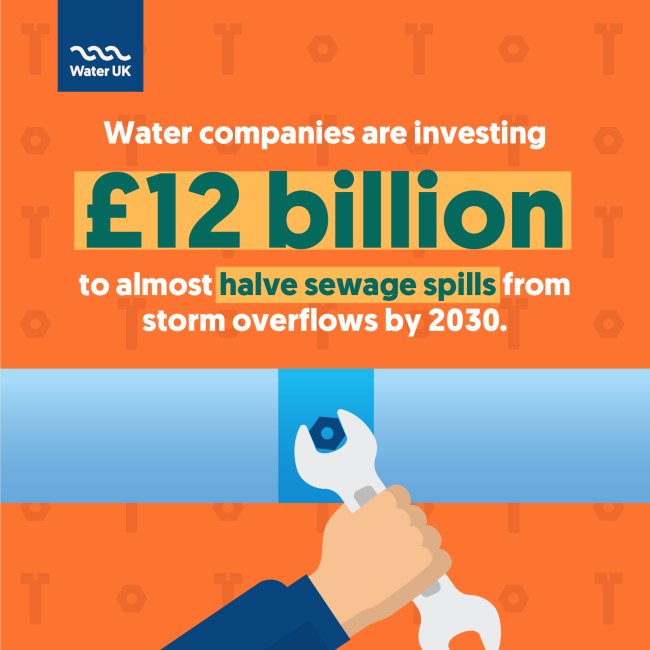
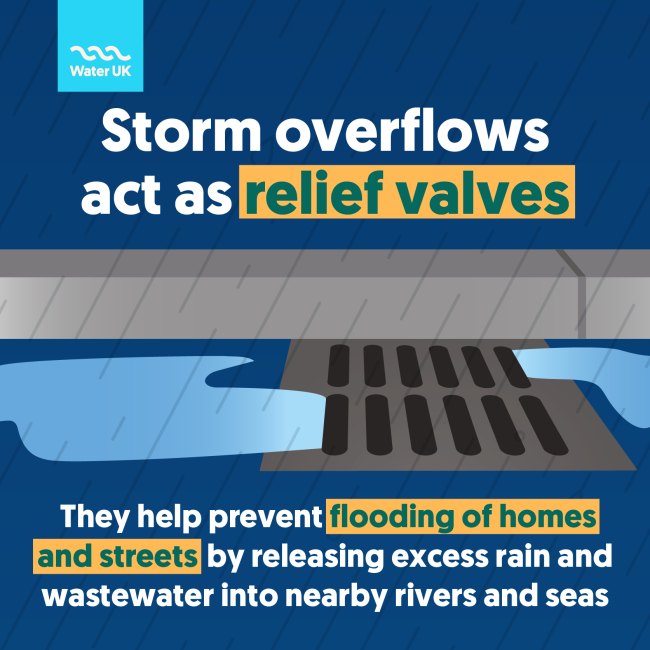
Throughout Europe, storm overflows were routinely incorporated into sewers for most of the twentieth century in order to release extra rainwater and wastewater into rivers or seas. However, overflows are spilling more often than they were intended to and the system can struggle to cope. This is why we have a plan to put it right. Water companies are investing £12 billion to almost halve spills from storm overflows by 2030. This is part of the largest amount of money ever spent on the natural environment.
Find out more


Live map
We created the world’s first ever live map so everyone can see when, where and for how long every storm overflow in England has been active in near real time. The map also shows the improvements planned for every overflow.

+ -
Our plan published in early 2024 set out when each storm overflow in England would benefit from proposed investment. In December 2024 Ofwat approved the plan, allowing water companies to invest £12 billion to almost halve storm overflows by 2030. A wide range of work is already underway. Between 2025-2030 nearly 3,000 storm overflow improvement projects are planned or in progress. Water companies will also increase storage in the network, expand their monitoring, and deliver green schemes like natural drainage solutions. In all, we expect to see at least 45% fewer spills from 2021 to 2029.
+ -
We created the world’s first ever live map to show the operation of all sewage overflow sites across England. It also shows the improvement activity for every overflow.
+ -
Each storm overflow is required to have a permit, which sets rules about when and how it can operate. Compliance with permits is very high at around 96%.
Permits are being tightened over time to reflect new, stronger standards. Where automatic monitoring or other data identifies a possible breach of a permit, the Environment Agency is notified and will investigate.
+ -
Storm overflows exist right across Europe to protect the public. Removing them completely would mean separating road and pavement drains from sewage pipes that connect to homes and businesses. Doing this would take many decades, cause significant disruption from digging up roads and under buildings, and is very expensive – a cost that would be added to bills. The government estimate this could add as much as £1,000 to the average annual bill.
However, this does not mean that nothing can be done. By investing record amounts in their infrastructure and sewer capacity, water companies will nearly halve the number of spills by 2030 before working to further strict targets over the subsequent years.
+ -
No, they are in many other European countries too. The UK has a much lower number of combined storm overflows than some other countries and in fact, some major European countries do not even know how many exist within their borders. By the end of 2023, England and Wales were monitoring 100% of their storm overflows.
+ -
Storm overflows also operate when there are blockages in sewers, that can be caused by wet wipes being flushed down the toilet. Wet wipes, cotton buds, sanitary products and cooking fats all create blockages in the pipes that make storm overflow spills more likely. Everyone can help by putting these items in the bin, not flushing them down the loo.
+ -
Each water company has published a Drainage and Waste Water Management Plan (DWMP) .
These are long-term plans for how water companies maintain, improve, and expand their drainage and wastewater systems. These plans are designed to ensure the resilience and robustness of the infrastructure, not just for today, but for decades to come.
Each plan takes a minimum 25-year outlook, tailored to the specific risks and challenges of individual water companies. This long-term approach enables companies to adapt to future pressures such as climate change, population growth, and urban development.
The production of these plans are led by water companies. By planning together, organisations are more likely to work together to deliver improvements that benefit the communities we live and work in.
FAQs
Other topics


Sustainable drainage
Rainwater is a major cause of storm overflow activation and flood risk

Sewage treatment works
Treating and cleaning sewage before it is released into the environment