


Views
Why haven't we built a reservoir in over 30 years?
2026 has seen one of the worst droughts in living memory. More than 80% of England is now officially in drought and the Environment Agency recently put three areas in the South East and South West of the country into ‘severe drought’ due to critically low reservoir levels. As climate change bites, the population grows and demand for new housing and data centres, increases so does our need for water. The Environment Agency has predicted we will need an additional 5 billion litres of water by 2055 to meet this growing demand. Given climate change, we are likely to need even more water. Reservoirs are only part of the answer, but everyone agrees we don’t have enough of them to capture and store water. So, why haven’t we built a reservoir in a generation? And what needs to happen to ensure water shortages aren’t something we have to endure every year?
When did we last build a reservoir?
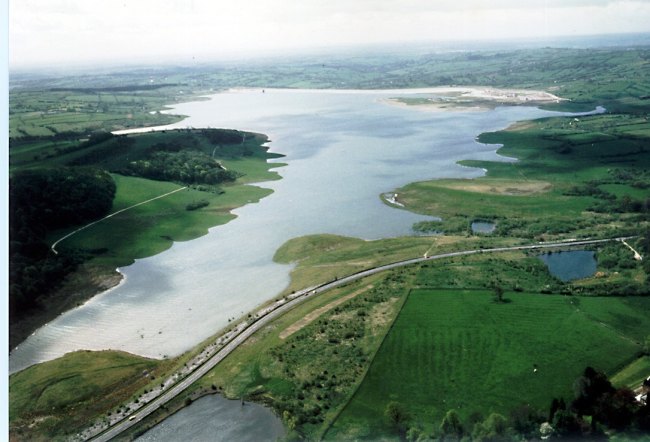
The last reservoir built in England was Carsington Water in Derbyshire in 1992. Since then, other reservoirs have been expanded, notably Abberton reservoir in Essex which saw its capacity increased by 58% in 2015 – the project took 20 years from start to finish. But no new reservoirs have been completed since 1992.
Why haven’t we built a reservoir?
While a reservoir may seem like a big hole with water in, they are in fact incredibly complicated feats of engineering that take years, sometimes decades, to plan and build. They can also be controversial with local campaign groups and, often, councils fiercely opposing them. For many years, the water regulator Ofwat was told by government to keep household bills as low as possible. As a result, regulators systematically blocked major capital projects like reservoirs. The former Chief Executive of the Environment Agency, Sir James Bevan said in a speech in 2019 in order to avoid running out of water or, in his words, escape the ‘jaws of death’, a series of measures would be required including “most controversially of all, [building] new reservoirs.” Building reservoirs should not be controversial at all. They are, literally, things that hold the most essential ingredient to life – water.
Water companies have proposed new reservoirs in the last three decades and many other schemes have been talked about for 50 years or more without ever being allowed to be built. The most infamous example is probably the Abingdon (now called White Horse) reservoir in Oxfordshire which was first suggested way back in 1996 with formal proposals rejected by the Environment Agency in 2007 who said the need for the reservoir was ‘not proven.’ The proposals were then rejected again in 2011 with the then Environment Secretary Caroline Spelman saying there was ‘no immediate need’ for the reservoir. Had the reservoir at Abingdon been approved 20 years ago it would now be complete and providing water to people all over the South and East of England. Instead, it will be at least 2040 before the White Horse Reservoir starts supplying water. Because of the delays in approving its construction, it will now cost about more than five times more money to build than if it had been approved in 2011 instead of 2024.
Some proposed reservoirs go back even further. South East Water has finally got permission to build a new reservoir at Broad Oak near Canterbury in Kent, but the idea of a reservoir in that location has been around for more than 80 years! When it opens in the 2030s Havant Thicket will be the first reservoir built since 1992 but the land for the reservoir was first purchased in 1965!
It may seem counterintuitive, but water companies want to build reservoirs. Water company revenue is automatically linked to the amount of money they spend. Put simply, water companies make money by building reservoirs and other large infrastructure.
Are we now building new reservoirs?
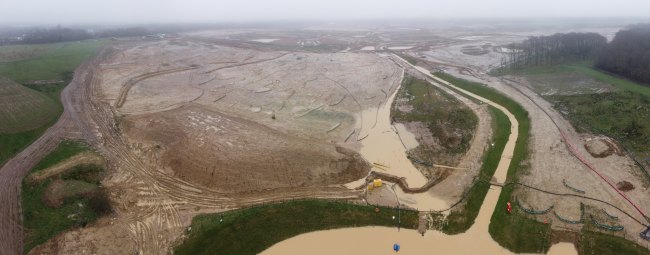
Yes, we are now building ten new reservoirs across England. The first of these, Havant Thicket near Portsmouth, is under construction and will be finished in 2034. However, none of the other reservoirs is currently under construction and it will be many years before they start supplying water.
Why do reservoirs take so long to build?
Reservoirs are massive pieces of infrastructure that take years to construct. However, they are slowed down considerably by burdensome planning and consultation requirements that can add years to project timelines.
Some of the planned reservoirs have been designated as ‘nationally significant’ infrastructure projects which allows the Secretary of State to accelerate the planning process to allow these projects to be completed faster. However, reservoirs (and other major infrastructure) still face significant barriers.
In our recent ‘barriers to project delivery’ report we argued that water schemes should receive the same fast-track planning route used for the Universal Studios theme park, which cut its planning process from two years to six months. Water UK also recommended that Natural England and the Environment Agency should be instructed by government to use available scientific evidence, rather than demanding unnecessary additional assessments based on hypothetical risks.
What about leakage?
Around a fifth of treated water is lost through leaking pipes - about 2.9 billion litres a day. The leaky pipes aren’t all the responsibility of water companies though. Between 1 billion and 1.5 billion litres of water is lost through the pipes belonging to homes and businesses.
Following privatisation of the water industry in 1989, the regulatory consensus was that water companies should focus on fixing leaks and managing consumer demand, rather than building new water storage. At this time, leakage was at levels 40% higher than it is now. Thanks to this action on leakage water companies are actually supplying less water than they were in the 1990s despite the population growing by more than 20%.
While leakage has been cut, around a third since privatisation, it is not a substitute for new, physical water storage. Leakage is currently at its lowest level on record and the industry plans to cut it by a further 17% by 2030. But even if leakage were eliminated entirely, something no country has achieved, we would still need more reservoirs to meet the ever-increasing demand for water.
Share


