


Views
8 takeaways from the International Water Association's World Water Congress & Exhibition in Glasgow
The International Water Association's World Water Congress & Exhibition (IWA WWC&E) arrived in Glasgow earlier this month. As the IWA's flagship event, and the first time the official IWA Congress has ever been hosted in the UK, it brought together ten thousand water professionals, researchers, regulators and policymakers from across the world.
Across a packed programme of fora, technical sessions and workshops, a clear message emerged: while the challenges facing water systems are becoming more complex, the opportunities to tackle them are growing too. From climate resilience and public health to regulation, finance and innovation, delegates shared ideas, challenged established thinking and explored solutions that could shape the future of water.
Here are our 8 biggest takeaways from IWA Glasgow 2026:
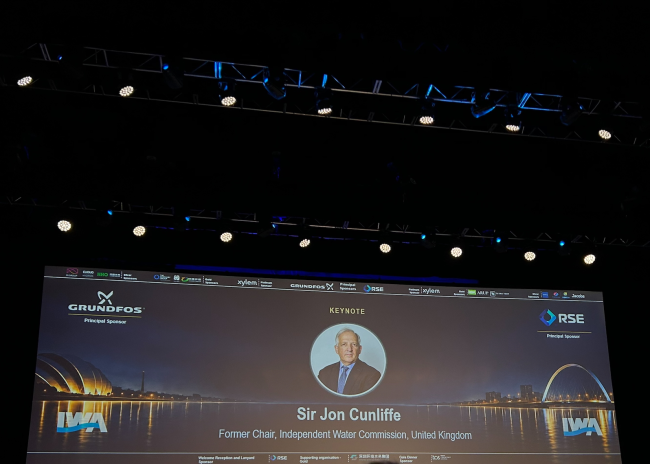
1. Momentum is needed to deliver on regulatory reform
Sir Jon Cunliffe's contribution presented at the event and his speech underscored the importance of institutional reform and clearer accountability. He said progress since he delivered the report has been “pretty slow” and highlighted the need for better coordination across the sector. “Water is a complex system, and a system is more than the sum of its parts, it’s the way the parts interact with each other,” he said. In Glasgow, there was a growing sense that attention is shifting from what reform should look like to how quickly it can be delivered. The consensus was clear that the sector needs the government to build momentum and deliver improvements as soon as possible.
2. Solving water challenges requires unprecedented levels of investment
Discussions around the Glasgow Framework highlighted the simple but important point that investment follows confidence. Whether public or private, capital is attracted to countries that provide clear long-term strategies, stable regulation and policy certainty. Across the Congress, there was broad agreement that creating those conditions is just as important as finding new sources of funding if we are to build the resilient water systems the world needs.
3. The UK must get better at managing rain where it lands
A standout session from the week was the 'Managing Rain Where It Lands' Forum. Contributions from Julia Buckley MP and international speakers highlighted how nature-based solutions, sustainable drainage and urban design can reduce flood risk while improving communities. Examples from Germany and Belgium showed how cities are incentivising rainwater capture, infiltration and storage at source, reducing pressure on drainage networks and creating greener urban environments in the process.
4. A One Health approach should prioritise pollution prevention over pollution treatment
The One Health Forum explored the interconnectedness between human, animal and environmental health, particularly in the context of substances of emerging concern and antimicrobial resistance. The session featured fascinating presentations from researchers at the world-leading Wastewater Research Centre Wales, at Bangor University, as well as international examples from the Netherlands, US and Turkey. The key takeaway was the growing international support for controlling pollution at source. Whether discussing PFAS, pharmaceuticals, microplastics or mercury, the consensus was that preventing harmful substances from entering the environment is often more effective and more affordable than trying to remove them later. Put simply, the polluter pays principle works best when it creates the incentives on polluters to stop polluting in the first place. That way, the pollution never reaches rivers, wastewater networks or drinking water sources in the first place.
5. Diverse leadership drives better decision-making
One of the most energising themes throughout Glasgow was the growing visibility of female leadership across the global water sector. From utility CEOs and regulators to engineers and researchers, the Women in Water sessions highlighted how diverse leadership drives better decision-making, better outcomes and a stronger talent pipeline for the future. The conversations were a reminder that solving water challenges requires every perspective at the table.
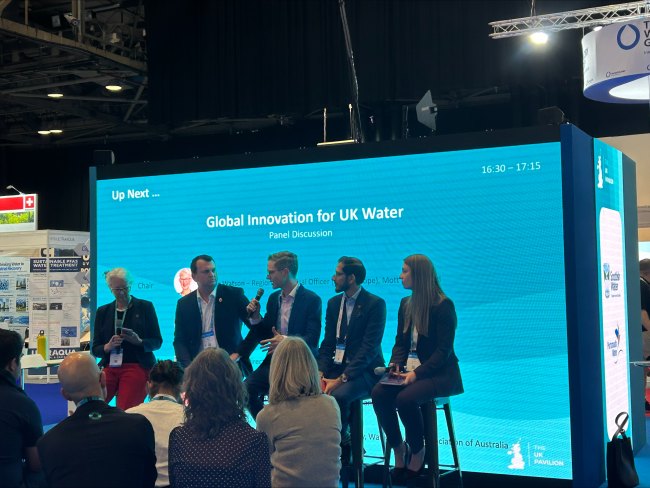
6. Global examples can show us how to make innovation in the UK stick
Speaking on the UK Pavilion's 'Global Innovation for UK Water' panel, Water UK's Director of Policy, Dan Walker-Nolan, raised the point that innovation is not an end in itself. The real challenge is creating the regulatory and policy framework that allows good ideas to move beyond pilots and into widespread adoption. The discussion highlighted international examples, including water reuse, where countries such as China and Australia are moving faster because the enabling conditions are already in place.
7. Utility leaders from around the world are concerned about the same things
The Utilities Leaders' Forum offered a useful reality check that whether you are in Australia, Singapore, Denmark or the UK, many water challenges look remarkably similar. One issue that came up repeatedly was the rapid growth of data centres and their demand for water and energy. We heard striking examples from Australia, where some proposed developments in Sydney would consume as much water as 20% of the population. The message was clear that enabling growth requires clear legislation, transparency and long-term planning, not simply saying yes to every application.
8. Water is a global conversation, even when local challenges differ
When more than two billion people still lack safe drinking water and more than three billion lack managed sanitation, it would be easy to focus only on the differences between countries. Yet one of Glasgow's biggest lessons was how much common ground exists. Whether the discussion was resilience, finance, regulation or technology, delegates repeatedly came back to the importance of long-term planning, clear governance and sustainable investment. The specifics differed from place to place, but the opportunities to learn from one another were clear. In Milan, for example, a digital twin of the water network is being used to map leak data and predict future failures, demonstrating how digital tools can help tackle a challenge faced by utilities worldwide. Water challenges may vary, but the foundations for providing an effective, sustainable and wholesome water service remain universal.
Share


